
Understanding Anxiety

Anxiety disorders are among the most common mental health conditions in Australia, affecting around 1 in 4 people at some stage of their life (Beyond Blue). Around 15% of Australians aged 16-24 experience an anxiety disorder each year (Orygen). Everyone feels anxious sometimes. You may have heard the phrase ‘fight, flight, or freeze’ response. This is anxiety being activated physiologically. The brain and body work together to keep us alert to possible threats by releasing stress hormones like adrenaline and increasing our heart rate. In small amounts, it can be helpful and motivating but when the body becomes overprotective and reads every uncertainty as danger, our nervous system can become stuck in high alert mode. The good news is that anxiety is highly treatable and with the right support, living with it becomes easier too.
Common Types of Anxiety
Generalised Anxiety Disorder (GAD)
Ongoing and excessive worry about everyday things such as school, work, health, relationships, or the future. Most common type of anxiety.
Social Anxiety
Intense fear of being judged, embarrassed, criticised, or negatively perceived by others in social settings and not wanting to be around these environments.
Panic Disorder
Experiencing reoccurring panic attacks that bring on intense surges of fear or discomfort that can feel like you’re ‘dying’ or having a ‘heart attack’, alongside ongoing fear of having another panic attack.
Separation Anxiety
Excessive fear or distress about being separated from parents, caregivers, partners, or other safe people and places, worrying that something bad will happen to them or you.
Specific Phobias
Strong fear of a particular object or situation such as needles, flying, spiders, heights, or vomiting, leading them to avoid these situations.
Agoraphobia
Fear of settings where escape may feel difficult, embarrassing, or help may not be available, often leading to avoidance of crowds, public places, transport, or leaving home.
What Anxiety Can Look Like
Physical symptoms
Hyperventilating or shortness of breath
Sweating, shaking, or dizziness
Nausea, stomach aches, or diarrhoea
Muscle tension or headaches
Difficulty sleeping or feeling exhausted
Shaking the leg or fidgeting with hands
Increased heart rate
Emotional symptoms
Feeling embarrassed, ashamed, or self-conscious
Feeling restless or ‘on edge’
More sensitive to criticism or stress
Constantly worrying or fearful that something may happen
Feeling incapable of handling uncomfortable situations
Behavioural changes
Avoiding situations, places, people, or tasks for short term relief
Seeking constant reassurance
Attendance issues
Overpreparing or overexplaining things
Needing everything to feel ‘perfect’
Withdrawing socially
Thoughts people may have
‘What if something bad happens?’
‘People will judge me.’
‘I’m going to embarrass myself.’
Overthinking or having uncontrollable, racing thoughts
Expecting the worst-case scenarios
Jumping to conclusions
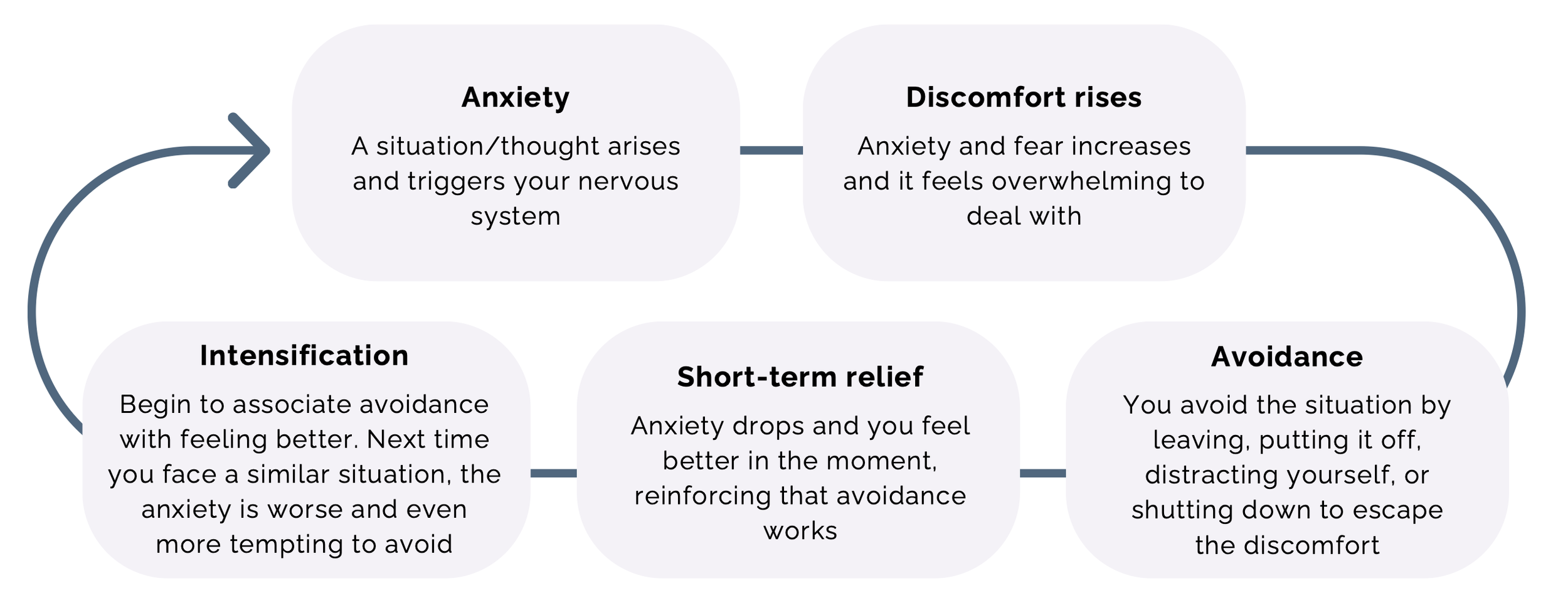
Cycle of Avoidance – The Anxiety Trap
One of the most important things to understand about anxiety is that avoidance makes it stronger. When something feels overwhelming, avoiding it gives you temporary relief. The brain learns that avoiding things feels safe, teaching our nervous system that the situation must really be dangerous. Over time, the anxiety grows larger and avoidance spreads. The goal isn’t to eliminate that feeling altogether but to learn how to sit with the discomfort and work through it safely.
Strategies That Help
Only Way Out Is Through
Slowly and gradually facing your fears instead of avoiding them can teach the brain and body that the situation feels uncomfortable but is not actually dangerous. Using calm, compassionate language through anxiety can help settle the nervous system while building confidence and resilience over time.
‘I’m capable of handling hard situations.’‘It’s okay to feel like this.’‘I’ve been here before. I got this.’
Reduce Reassurance Seeking
Reassurance can feel helpful in the moment, but repeated reassurance can sometimes keep anxiety going. It teaches the brain that uncertainty is unsafe or needs to be constantly checked. Over time, this can accidentally increase worry and self-doubt. Seeking reassurance can look like:
Repeatedly asking ‘Are you sure?’ or ‘Will I be okay?’
Constantly checking symptoms or worries online
Repeated texting or calling when someone hasn’t replied
Avoiding situations unless someone guarantees things will be okay
Checking things multiple times for certainty
Learning to gradually sit with uncertainty is an important part of building confidence and reducing anxiety in the long-term.
Stay connected
Anxiety often pushes people to avoid or withdraw from activities that are important for wellbeing and recovery. Maintaining routines will help support emotional regulation, confidence, and social interaction. This can include:
School attendance
Work attendance
Consistent sleep routines
Exercise and walking schedules
Hobbies and fun activities
Social connection and support
Small or partial participation is heavily encouraged as it’s still more helpful than complete withdrawal.
Grounding Techniques
Using self-soothing strategies can help regulate your emotions through deep breathing, taking a short break, meditation or mindfulness, exercising, identifying the 5 senses, positive affirmations, or journalling will help redirect your attention away from the distressing thoughts and focus on staying present.
Children and teenagers borrow calm from the adults around them. Staying regulated yourself is often one of the most powerful supports you can provide.
Helpful Apps
Having a tool to confront or embrace your anxious thoughts can be a great complement to therapy with a professional. It can also provide a sense of empowerment between sessions. These apps may help manage symptoms or panic however, they are not a replacement for therapy or emergency services.
ClearlyMe App
Designed specifically for teenagers experiencing anxiety, stress, low mood
Uses evidenced-based CBT strategies to build coping skills and emotional resilience
Short, interactive activities designed for everyday use
Developed by the Black Dog Institute
Headspace App
Suitable for both young people and adults
Focuses on mindfulness, relaxation, stress reduction, sleep support
Includes guided meditations, breathing exercises, calming techniques
Helpful for managing anxiety, emotional overwhelm, sleep difficulties
Sleep Ninja App
Designed for teenagers experiencing sleep difficulties linked to stress and anxiety
Uses evidenced-based CBT for insomnia strategies to improve sleep habits and routines
Includes sleep tracking, relaxation tools, and structured daily support
Developed by the Black Dog Institute
When to Seek Professional Help
Consider looking for support when anxiety begins to interfere with your daily life and overall wellbeing through behaviours such as:
Avoiding school, work, social gatherings, or leaving the house
Frequent panic attacks or overbearing fear
Difficulty sleeping, concentrating, or relaxing
Feeling stuck, hopeless, or emotionally exhausted
Ruminating thoughts that are difficult to control
Increased irritability, emotional outbursts, or withdrawal of friends and family
Relying heavily on reassurance or avoidance to cope
Early support can help prevent anxiety from becoming bigger and harder for you to manage over time. The goal is not to remove all anxiety completely, but to help you better understand it, learn healthy ways to cope with it, and gradually feel more confident managing your everyday life.
Effective Treatments for Anxiety
Counselling
Cognitive Behaviour Therapy (CBT)
Acceptance and Commitment Therapy (ACT)
Exposure-based Therapy
Psychoeducation
Nervous system regulation strategies
Medication support if necessary
Helpful Resources
Lifeline – 13 11 14, Text message – 0477 131 114, Online chat available 24/7
24/7 crisis support and suicide prevention services.
Kids Helpline – 1800 55 1800
Free counselling and support for young people ages 5-25 years old.
Anxiety Recovery Centre Victoria Helpline – 1300 269 438 or 03 9830 0533, Mon-Fri 10am-4pm
Provides support, information, and referral to people with anxiety disorders.
Beyond Blue (https://beyondblue.org.au/)
Mental health information, self-help tools, and professional directory.