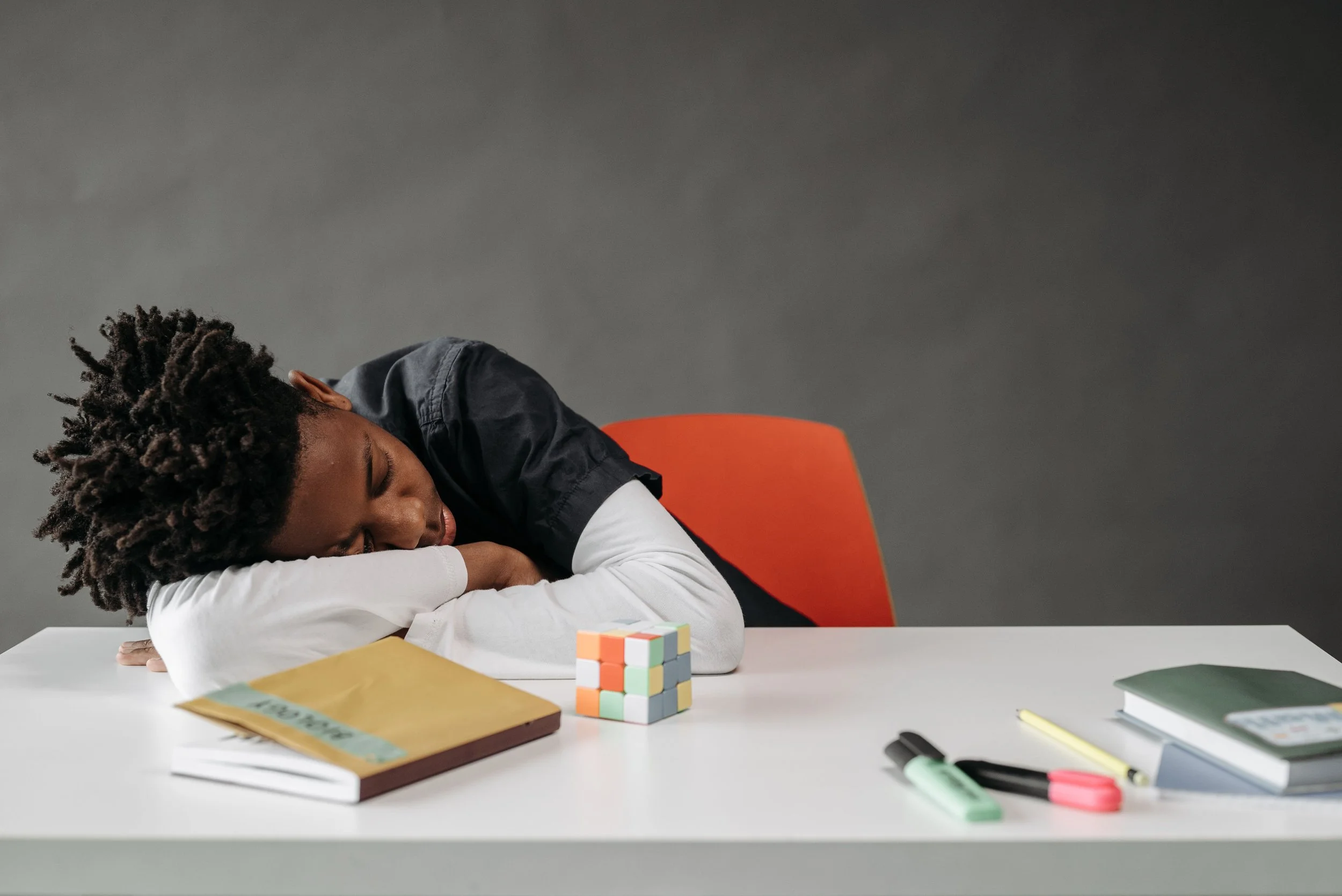
Homework Without the War
A guide for parents reducing the emotional load of homework time

If homework is the worst thirty minutes of your day, you are not alone. It is often the moment when school demands, family time, tired bodies, and parental anxiety all collide at the same dining table.
Homework can be done without a daily battle. The key is usually keeping it small, predictable, and as free as possible from the leftover stress of the school day.
Set the Table, Then Sit Down
Have a regular time and place for homework. Predictability tends to lower friction.
Allow time to eat and decompress before starting, rather than diving straight in.
Keep the workspace simple, with a clear surface, water, and only the tools that are needed.
Put phones somewhere else entirely, rather than relying on Do Not Disturb.
Keep It Short and Shaped
Most primary school-aged children work best in blocks of around 10 to 20 minutes.
Use a visible timer where possible.
Build in movement breaks between subjects, not only at the very end.
Tackle the hardest task first, while concentration is still fresh.
Stop on a high note. Finishing on one small win is usually better than grinding on until everyone is frustrated.
Your job is to set the scaffold.
Their job is to do the thinking.
Scaffold, Don’t Solve
Ask questions rather than giving answers, such as ‘what’s the first step here?’
Sit close by without hovering. Simply being nearby, sometimes called body-doubling, can help a lot.
Resist the urge to redo their work in your own handwriting.
Praise the effort involved, rather than only the result.
Let small mistakes stand. They are useful information for the teacher, not a reflection on you.
When to Step In Further
Homework is regularly taking longer than the school’s stated guidelines, week after week.
Tears or shutdowns have become a routine part of homework time.
Your child is hiding tasks or being untruthful about whether homework is finished.
You find yourself doing more of the actual homework than your child is.
Talking to the School
Teachers generally want to know when homework is causing significant stress at home. A short email along the lines of ‘this is regularly taking ninety minutes and we are hitting a wall at thirty’ will usually open a helpful conversation. Adjustments such as a reduced load, alternative formats, or extra time are common and reasonable responses. If there is an underlying learning difficulty, ADHD, or anxiety, a psychological assessment can sharpen the picture and unlock more formal supports.
Remember
Homework struggles are extremely common, and they rarely reflect a lack of effort from you or your child. Keeping expectations realistic, protecting the relationship, and looping in the school when needed will do more for your child’s learning over time than winning any single night’s battle.
HELPFUL RESOURCES
-
Practical Australian parenting strategies for homework, routines, and learning support.
-
Information and support for specific learning difficulties, including dyslexia and dysgraphia.
-
Information, advocacy, and family support across Australia.
-
Reliable Australian health information, including child development and learning.